
Macon County Clerk Office
The Macon County Clerk of Superior Court is the primary local court-records officer for Superior Court and District Court files. The office maintains civil, criminal, domestic, traffic, small claims, special proceeding, estate, judgment, and court financial records. The Clerk also supports public terminals, certified-copy requests, docket access, estate administration, and records that are not available through the public Portal.
North Carolina uses a Clerk of Superior Court model rather than separate county and district clerks for court case files. That local structure matters in Macon County because court files are not held by the Register of Deeds or Sheriff's Office. The Register handles marriage licenses, vital records, land records, and recorded instruments. The Sheriff handles detention, many arrest records, civil process, and active enforcement questions.
Macon County's eCourts Track 5 rollout on July 22, 2024 changed the first stop for many modern case searches, but it did not remove the Clerk's local role. Portal results are public search results. Certified records, public terminals, older files, paper questions, estate files, and restricted-record questions still need the Clerk's Office. That is especially important for users who need a document that can be filed with another agency or used in a legal proceeding.
Macon County Clerk of Superior Court
5 West Main Street
Franklin, NC 28734
828-349-7200
Monday-Friday, 8:00 a.m.-5:00 p.m.
Macon County Clerk Duties
The Clerk accepts filings, keeps case indexes, maintains dockets and minutes, issues certified copies, collects court costs, and routes eligible case activity through eCourts. The office is the local counter for file questions when an eCourts Portal search is incomplete, when a certified copy is needed, or when an older case is not clear online.
For civil cases, the Clerk's record can show complaints, answers, summons returns, motions, orders, judgments, liens, executions, and satisfaction entries. For criminal and traffic matters, the Clerk's record can show charges after filing, court dates, pleas, dispositions, sentencing, costs, and failure-to-appear events. For estates, the Clerk's record can show wills, applications, letters, inventories, accountings, creditor notices, fiduciary orders, and final discharge activity. Each record type has its own access limits.
- Maintains Superior Court and District Court records for Macon County.
- Handles estate administration through the Clerk's estates function.
- Provides certified copies when public records are eligible for release.
- Supports court costs, judgments, special proceedings, and public terminals.
- Directs users to eCourts Portal, File & Serve, Guide & File, and court-date tools.
The North Carolina public-records inspection statute is one official source for copy and inspection duties.
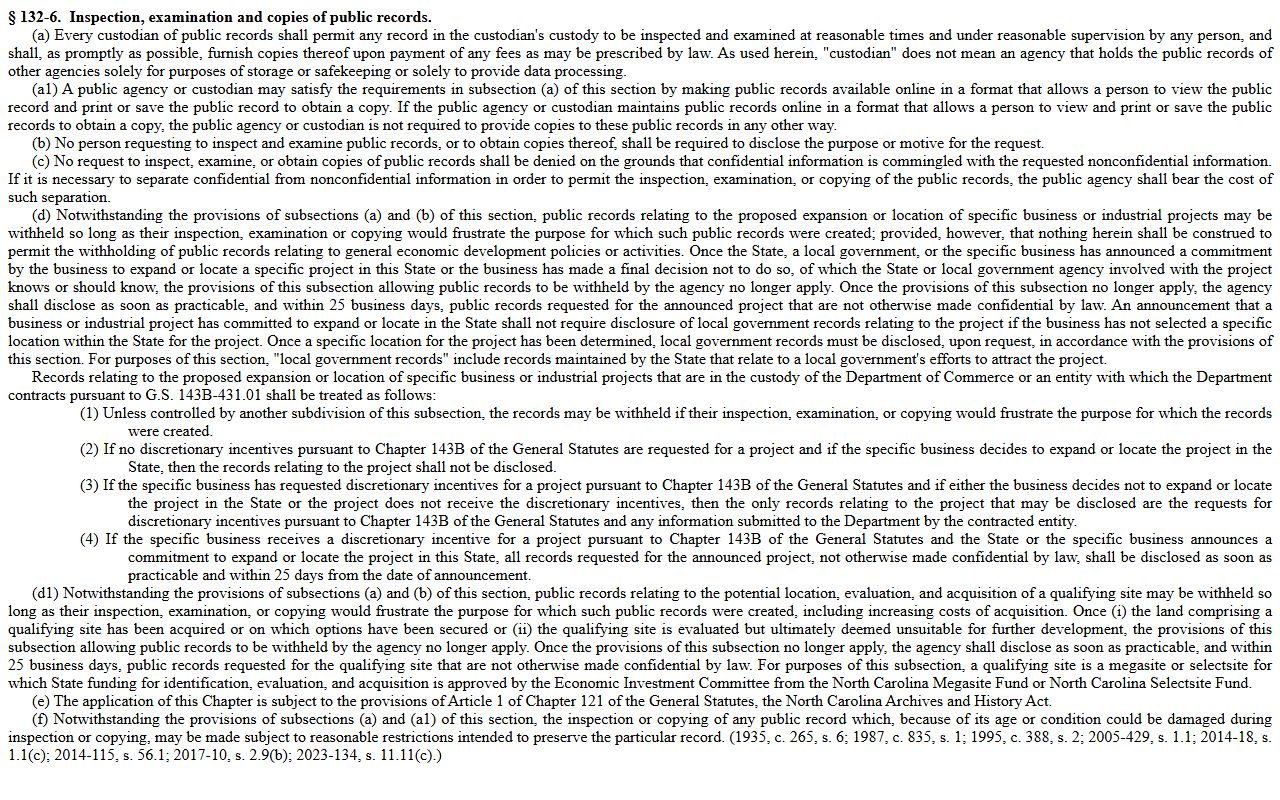
That statute supports public access, while court-specific rules still control sealed, confidential, juvenile, and expunged material.
Request Certified Court Copies
Certified copies are official court copies with court certification. They may be needed for appeals, title issues, immigration matters, employment licensing, name changes, estate administration, or proof of a judgment. A printed Portal screen is not the same thing as a certified copy. The Clerk should be contacted when an official seal or certification is required.
The best request starts with the case number, but the Clerk may also need the names of the parties, the type of case, the approximate filing date, and the exact document requested. A request for a divorce judgment differs from a request for a criminal disposition, estate letter, civil judgment, or traffic case disposition. If the record is sealed, expunged, juvenile, confidential, or partly redacted, staff may not be able to release the same information that appears in an ordinary public file.
- Search eCourts Portal or court-date tools to identify the case number, party names, and court division.
- Confirm that the requested document is public and eligible for release.
- Contact or visit the Macon County Clerk of Superior Court with the case number, document name, and copy type.
- Use the current Judicial Branch fee chart or Clerk instructions for copy and certification charges.
- Pick up the copy or follow the Clerk's current mailing process if mail service is available for the request.
Macon Clerk Request Fields
The research did not locate a unique Macon County court-record request form. A useful request to the Clerk should still include enough detail for staff to identify the correct file and document. Case number is best, but party names, filing date range, case type, and document title can help when the file number is unknown.
| Field | Required | Notes |
|---|---|---|
| Case number | Best identifier | Use the official file number from eCourts, notice, or court paper. |
| Party names | Yes if no case number | Use full legal names and roles when known. |
| Document type | Yes | Examples include judgment, order, divorce decree, will, inventory, or disposition. |
| Copy type | Yes | State whether a plain or certified copy is needed. |
| Requester contact | Yes | Include phone, mailing address, and any pickup or mail preference. |
Macon County Clerk Fees
Copy, filing, estate, special proceeding, and criminal cost amounts should be checked against the current North Carolina Judicial Branch court costs page. The research file did not preserve current dollar amounts for each Clerk service, and stale fees should not be copied into a local page.
Costs can also depend on the posture of the case. A criminal judgment may include court costs, fines, restitution, attorney fees, and supervision fees. A civil case may involve filing costs, service costs, judgment costs, and copy charges. An estate may involve statutory estate costs tied to the filing type and estate value. The safest local practice is to check the statewide chart and then confirm with the Macon County Clerk before mailing payment.
| Fee category | Official source |
|---|---|
| Civil filing fees | Current Judicial Branch civil costs chart. |
| Criminal costs | Current criminal costs chart and case judgment. |
| Estate costs | Current estates chart and N.C.G.S. §7A-307. |
| Certified copies | Confirm current copy and certification charges with the Clerk. |
| Marriage and vital copies | Macon County Register of Deeds, not the Clerk. |
Clerk Forms and eCourts
Macon County is an eCourts county. Public case lookup uses eCourts Portal, eligible electronic filing uses File & Serve, and selected self-represented filings may use Guide & File. The Macon County local rules and forms page is the local Judicial Branch source for court-specific forms and notices.
The statewide online tools do different jobs. eCourts Portal is for public case lookup. Court-date search is for hearing dates and scheduled appearances. Online services can route users toward citation payment and related tasks. File & Serve is for eligible electronic filing, and Guide & File helps self-represented litigants prepare selected filings. A user looking for a certified copy should not assume that any of these tools can issue one.
- eCourts Portal for public case lookup.
- Court date search for scheduled appearances.
- eCourts information for File & Serve, Guide & File, and rollout context.
- Criminal background check instructions for statewide Clerk office terminal searches.
Mail and Online Access
Online access is useful for searching and checking public case status, but it is not the only channel. Mail and counter requests may be needed for certified copies, older records, estate files, and records that the Portal does not display. Use the courthouse address unless a current form names a different mailing address. For county administrative or sheriff records, send the request to the office that keeps that record rather than the Clerk.
Older and mixed records may require extra care. A divorce decree is a court record, while a marriage certificate is a Register of Deeds record. A filed criminal charge is a court record, while live custody is a Sheriff's Office or Detention Center question. A deed connected to an estate may be a Register of Deeds record even when the estate file is with the Clerk. These office boundaries are one of the main reasons Macon County records should be routed by record type before a request is sent.
The Western District of North Carolina federal court is separate from the Macon County Clerk of Superior Court.
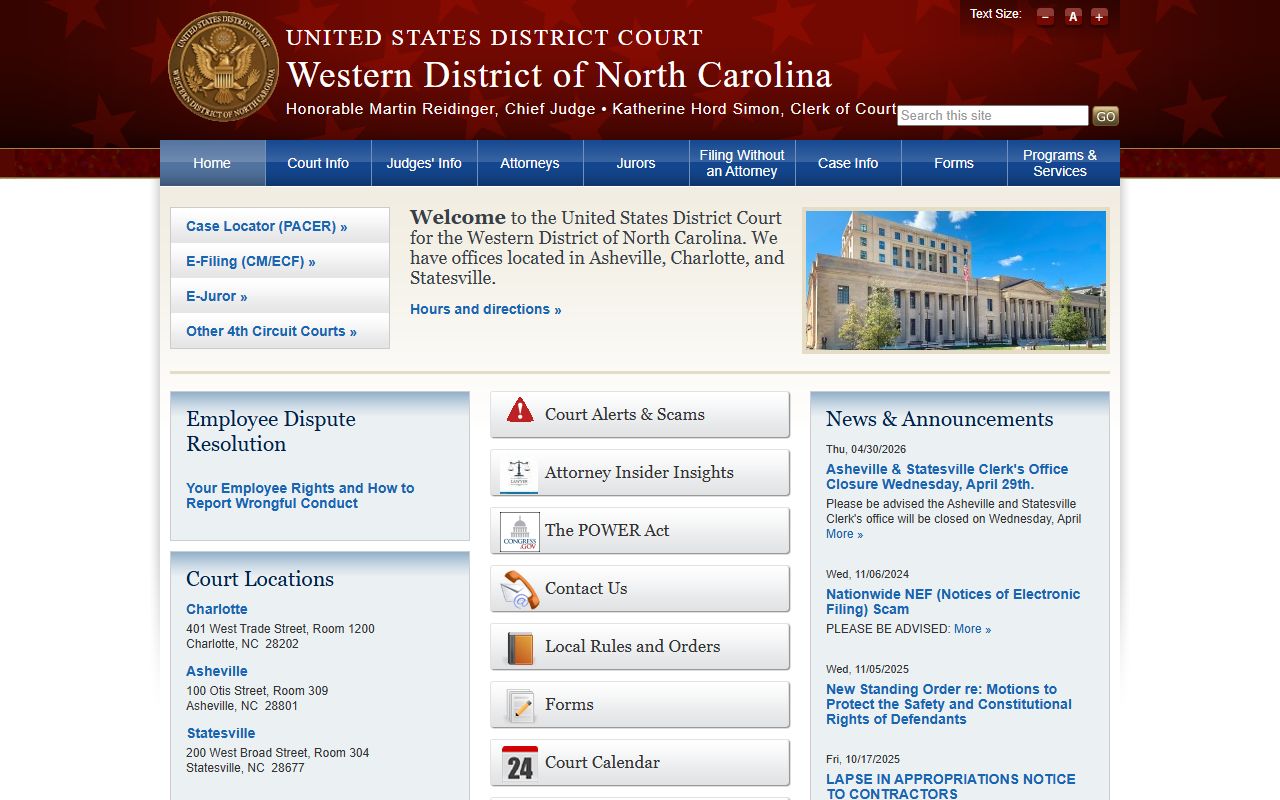
Federal filings, bankruptcy records, and federal criminal cases should be searched through federal systems, not the county Clerk counter.