
Clerk as Judge of Probate
North Carolina does not route Macon County estate matters to a separate local probate court building. The Clerk of Superior Court serves as ex officio judge of probate for many estate matters, and the Estates Division of the Clerk of Superior Court is the local office for estate filings, probate administration, certified copies, and estate-file questions. The Clerk's office is located at 5 West Main Street, Franklin, NC 28734, and the phone number is 828-349-7200.
Probate files can include wills, applications for letters, appointment papers, oaths, bonds, inventories, accountings, notices to creditors, claims, receipts, releases, orders, and final accountings. Estate proceedings may involve testate estates with wills, intestate estates without wills, small-estate collection by affidavit where allowed, summary administration in qualifying situations, guardianships, and special proceedings involving estate property. Some protected medical, financial, minor, or personal-identifier information may be redacted.
The official North Carolina wills and estates help topic explains the Clerk's probate role and statewide estate process.
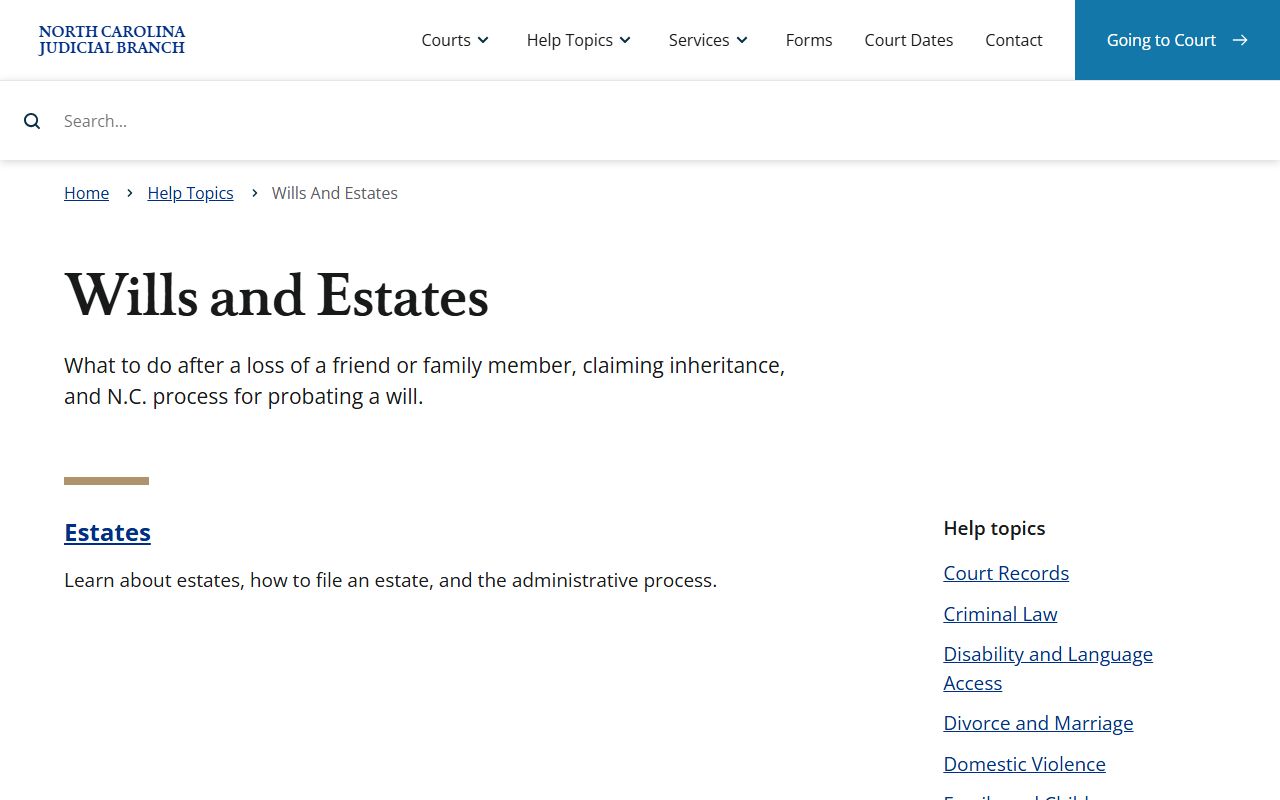
Use that statewide explanation together with the Macon County Clerk contact because estate filing and copy questions are local counter functions.
How to Search Estate Files
For public estate and special-proceeding records, start with the North Carolina eCourts Portal where available, then use the Clerk for files that do not appear online. Macon County became an eCourts Track 5 county on July 22, 2024, so newer public case access may route through statewide eCourts systems. Online public access may not include every document image, certified copy option, older file, or restricted record.
- Search the eCourts Portal by decedent name, party name, estate file number, county, case category, or date range.
- Select Macon County when a county or location filter is available.
- Review case type and party names carefully because estates, guardianships, and special proceedings may appear in related categories.
- Contact the Clerk of Superior Court for certified copies, older estate files, file inspection, or unclear online results.
- Search the Register of Deeds separately for deeds or recorded real-estate documents tied to an estate.
Probate Search Fields
Estate searches work best with the estate file number, but many users begin with a decedent name. If a person served as fiduciary, heir, guardian, or party in a special proceeding, party-name searches may also help. Date filters can separate older estates from newer filings.
| Field Label | Type | Required | Notes |
|---|---|---|---|
| Decedent name / party name | Text | No | Search the full name if known. |
| Estate file number | Text | No | Best identifier for an existing estate. |
| County | Dropdown/filter | Recommended | Select Macon County where available. |
| Case category | Dropdown/filter | No | Use estates, special proceedings, or guardianship options if shown. |
| Filing date range | Date | No | Useful for older estates and common names. |
| Search | Button | Yes | Runs the Portal search. |
Probate Contact and Filing Counter
The Estates Division is part of the Clerk of Superior Court office. There is no separate Macon County probate court address in the research. For estate filing questions, certified copies, public inspection, letters, and older probate files, use the courthouse address and Clerk number.
Macon County Clerk of Superior Court / Estates
5 West Main Street
Franklin, NC 28734
828-349-7200
Monday-Friday, 8:00 a.m.-5:00 p.m.
How Probate Works in Macon County
The usual estate path begins when an interested person determines whether the decedent left a will and then contacts the Clerk's Estates Division. If a will exists, it is presented to the Clerk. The Clerk reviews the application, appoints a personal representative when appropriate, issues letters, and opens the estate file. The fiduciary then gives required notices, gathers estate assets, handles creditor claims, files inventories and accountings, and seeks final discharge when administration is complete.
Contested matters can take longer. Disputes over heirs, real property, fiduciary conduct, creditor claims, accounting, or will validity may require hearings or a related civil or special proceeding posture. Estate real property can create a second records path because deeds, deeds of trust, satisfactions, and other recorded instruments belong with the Register of Deeds, not the estate file alone.
North Carolina estate administration statutes are published in Chapter 28A.
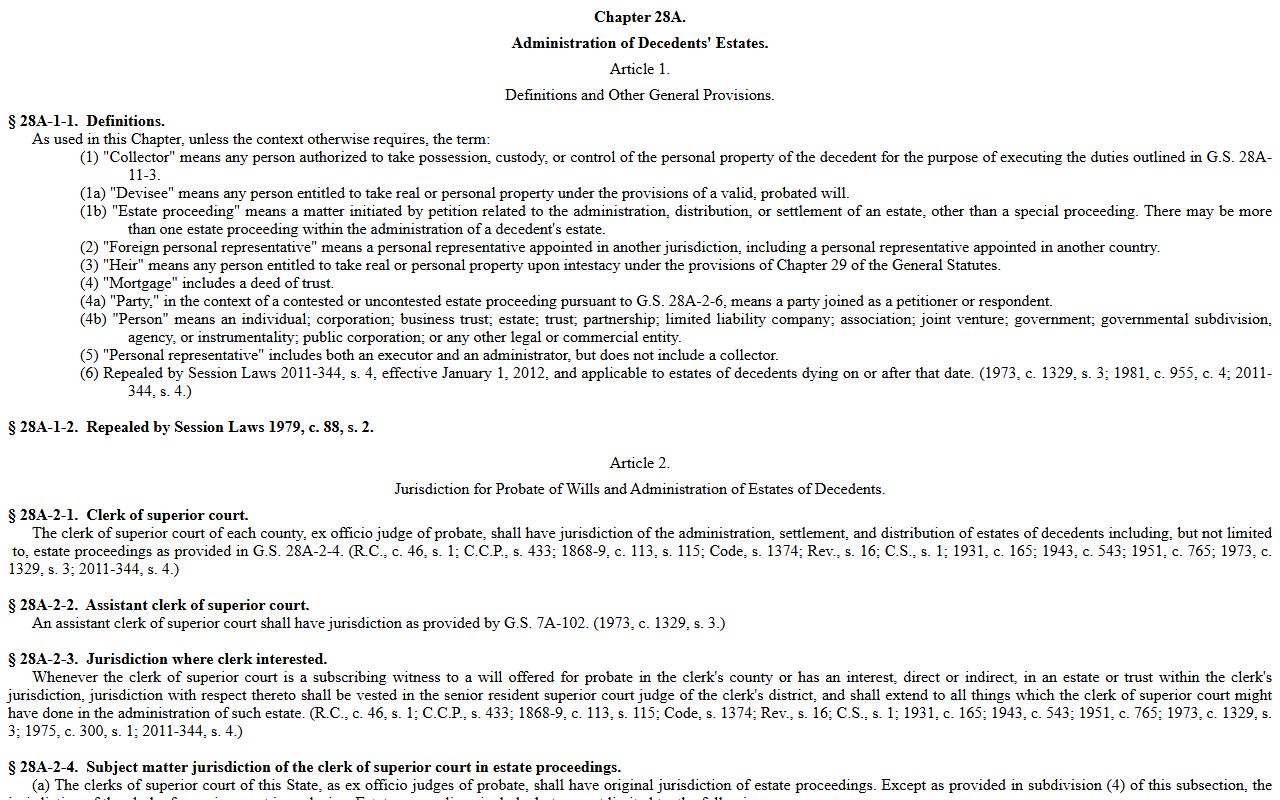
Use the statutes for legal framework, but rely on the Clerk for local filing steps and current form routing.
Probate Terms Defined
Estate records use terms that differ from ordinary civil case records. These definitions help identify which file or document is needed before contacting the Clerk.
- Testate
- The decedent left a will that is presented for probate.
- Intestate
- The decedent died without a valid will, so administration follows statutory rules.
- Executor
- The personal representative named in a will to administer the estate.
- Administrator
- A personal representative appointed when there is no executor available or no valid will.
- Letters testamentary
- Clerk-issued authority for an executor to act for the estate.
- Letters of administration
- Clerk-issued authority for an administrator to act for an intestate or qualifying estate.
- Inventory
- A filing listing estate assets early in administration.
- Accounting
- A fiduciary report showing receipts, disbursements, distributions, and remaining property.
- Guardianship
- A proceeding involving legal authority for a minor or incompetent adult, with access limits for sensitive information.
- Special proceeding
- A court proceeding that may involve estate property, partition, or other matters handled outside ordinary civil complaint practice.
Probate Fees and Costs
Estate costs should be verified through the current Judicial Branch court-costs charts and N.C.G.S. 7A-307. The research specifically warns not to invent value-based estate fees because filing type and estate value can affect costs. Certified-copy fees should also come from the current fee chart or the Clerk's office rather than an old copied dollar amount.
| Fee Topic | Official Source | Notes |
|---|---|---|
| Estate administration costs | N.C.G.S. 7A-307 and court-cost charts | May depend on filing type and estate value. |
| Small estate or affidavit filings | Current Judicial Branch fee chart | Verify eligibility and cost with the Clerk. |
| Certified copies | Judicial Branch fee chart and Clerk | Needed for banks, title, or formal proof in many situations. |
| Special proceedings | Current court-cost charts | Costs can differ from ordinary estate administration. |
N.C.G.S. 7A-307 is available from the North Carolina General Assembly estate costs page.
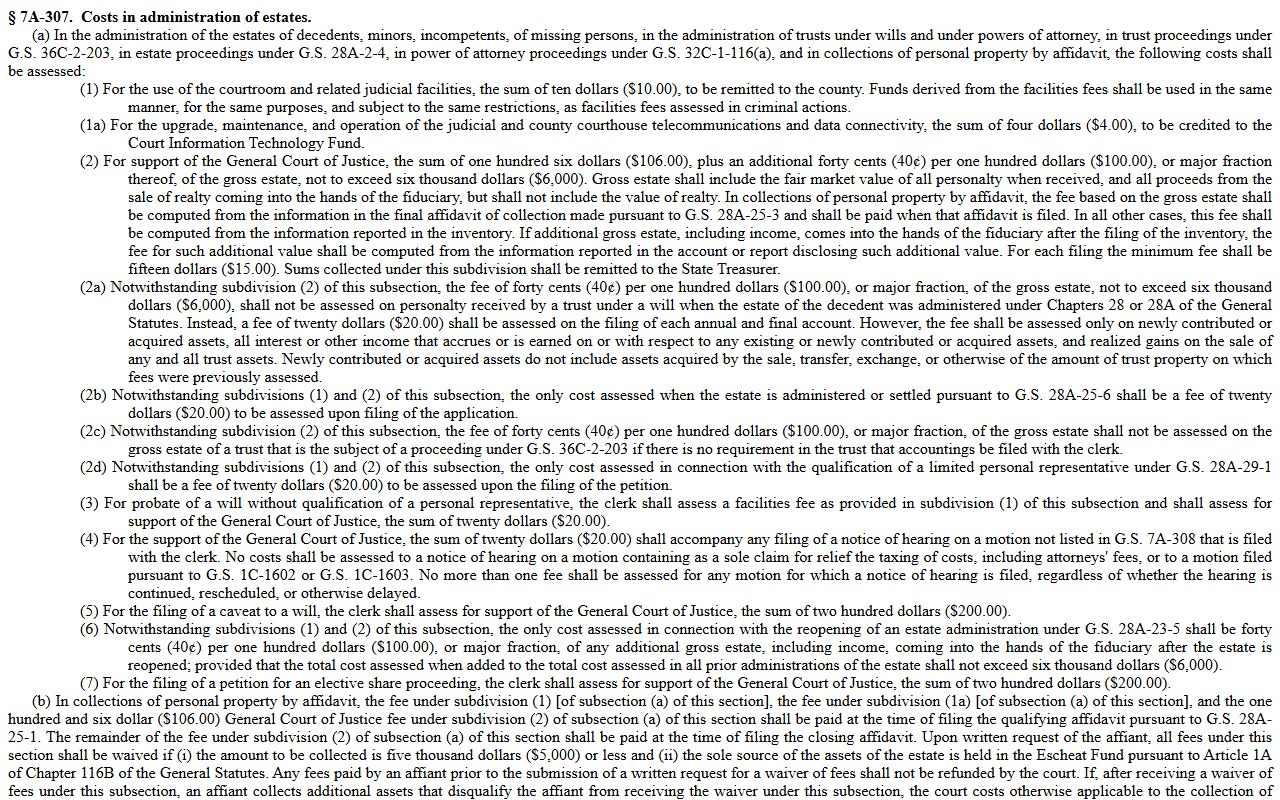
The statute explains the cost authority, while the Clerk and current Judicial Branch charts confirm the amount to pay now.
Estate File Contents and Restrictions
Public estate files may show the decedent, fiduciary, file number, will, application, letters, inventories, accountings, notices, claims, receipts, releases, orders, and final discharge. Guardianships, mental-health-related material, protected identifiers, minor information, financial account numbers, medical information, and sealed filings may be restricted or redacted. Public online detail may show the file and events without providing every document image.
Do not use the probate page to search marriage certificates, divorce decrees, active warrants, or current jail custody. Those records belong to the Register of Deeds, Clerk domestic case records, Sheriff's Office, or Detention Center. Probate overlaps with the Register only when an estate affects recorded real property, and the deed record still remains a separate Register of Deeds record.