
Macon County Superior Court Overview
Superior Court is the higher trial division for Macon County. It handles felony criminal cases, major civil matters outside District Court's jurisdiction, special proceedings, District Court appeals, and jury trials. District Court remains central because misdemeanors, infractions, traffic, domestic cases, juvenile matters, small claims appeals, and many early criminal events begin there.
Macon County belongs to North Carolina's statewide General Court of Justice and is tied to the 43rd Prosecutorial District for district attorney services. Appeals from state trial courts generally move to the North Carolina Court of Appeals, with the Supreme Court of North Carolina as the highest state court.
The title of this local page resolves to Superior Court because the State Court Structure Map identifies Superior Court as the primary trial court. The physical courthouse is still shared with District Court and the Clerk of Superior Court. That shared courthouse model means a Macon County case search should focus on case type and court division rather than assuming a separate building, separate county court, or separate probate court.
Macon County Trial Courts
The research did not identify numbered county trial courts. Macon County uses the statewide Superior Court and District Court structure at the county courthouse in Franklin, with the Clerk of Superior Court maintaining the court records for both divisions.
The same Clerk phone number and courthouse address are used for many local court-record questions. A visitor may be dealing with a Superior Court felony case, a District Court misdemeanor, an infraction, a domestic case, an estate matter, or a small claims appeal, but the public records counter and certified-copy process still begin with the Clerk's Office unless the record is held by the Sheriff or Register of Deeds.
| Court / Office | Type | Address | Phone |
|---|---|---|---|
| Macon County Superior Court | Felony, major civil, special proceedings, appeals, jury trials | 5 W Main St, Franklin, NC 28734 | 828-349-7200 |
| Macon County District Court | Misdemeanors, infractions, traffic, domestic, juvenile, lower civil | 5 W Main St, Franklin, NC 28734 | 828-349-7200 |
| Clerk of Superior Court / Estates | Court records, certified copies, probate, public terminals | 5 W Main St, Franklin, NC 28734 | 828-349-7200 |
| Magistrate / Small Claims | Small claims, summary ejectment, initial process, bond duties | Use Clerk or Sheriff for exact local routing | 828-349-7200 |
Superior Court vs District Court
The main local comparison is not Superior Court versus a county court. North Carolina's current trial structure is Superior Court, District Court, and magistrate functions within the General Court of Justice. The Clerk supports records for these court divisions and also handles estates.
This distinction is useful when reading Macon County court records. A felony may begin with a warrant or first appearance, but the final felony disposition usually belongs in Superior Court after indictment or transfer. A traffic citation or misdemeanor may stay in District Court. A small claim starts with a magistrate and can move to District Court on appeal. Estate files are handled through the Clerk's probate role.
| Point | Superior Court | District Court | Magistrate / Small Claims |
|---|---|---|---|
| Criminal role | Felonies after indictment or transfer | Misdemeanors, infractions, many first-stage events | Initial criminal process and some bond duties |
| Civil role | Major civil matters and appeals | Lower civil, domestic, juvenile, small claims appeals | Small claims and summary ejectment |
| Records custodian | Clerk of Superior Court | Clerk of Superior Court | Clerk after filing |
| Search path | eCourts Portal and Clerk | eCourts Portal, court-date search, Clerk | Clerk or court date tools where filed |
Macon County Case Movement
Criminal cases can begin with a citation, warrant, arrest, or magistrate order. Misdemeanors and infractions often stay in District Court. Felony cases may move through first appearance, probable-cause stages, indictment or information, Superior Court arraignment, pretrial motions, plea or trial, disposition, sentencing, and appeal. Civil cases follow the filing, service, answer, motion, hearing, judgment, and appeal path that fits the case type.
Court records may show only the events that have happened so far. A charge can appear before conviction. A continuance can move a hearing without ending the case. A dismissal can apply to one charge while another charge remains active. A judgment or disposition is the better field for outcome, and the sentence or order explains what the court required after that outcome.
Criminal flow: Arrest or citation › Magistrate / first appearance › District Court stage › indictment or information when required › Superior Court › disposition › sentencing › appeal.
Civil flow: Complaint or petition › service › answer › motions or hearing › judgment › collection, satisfaction, or appeal.
The official small claims help topic explains the magistrate-level process used for many lower civil disputes.
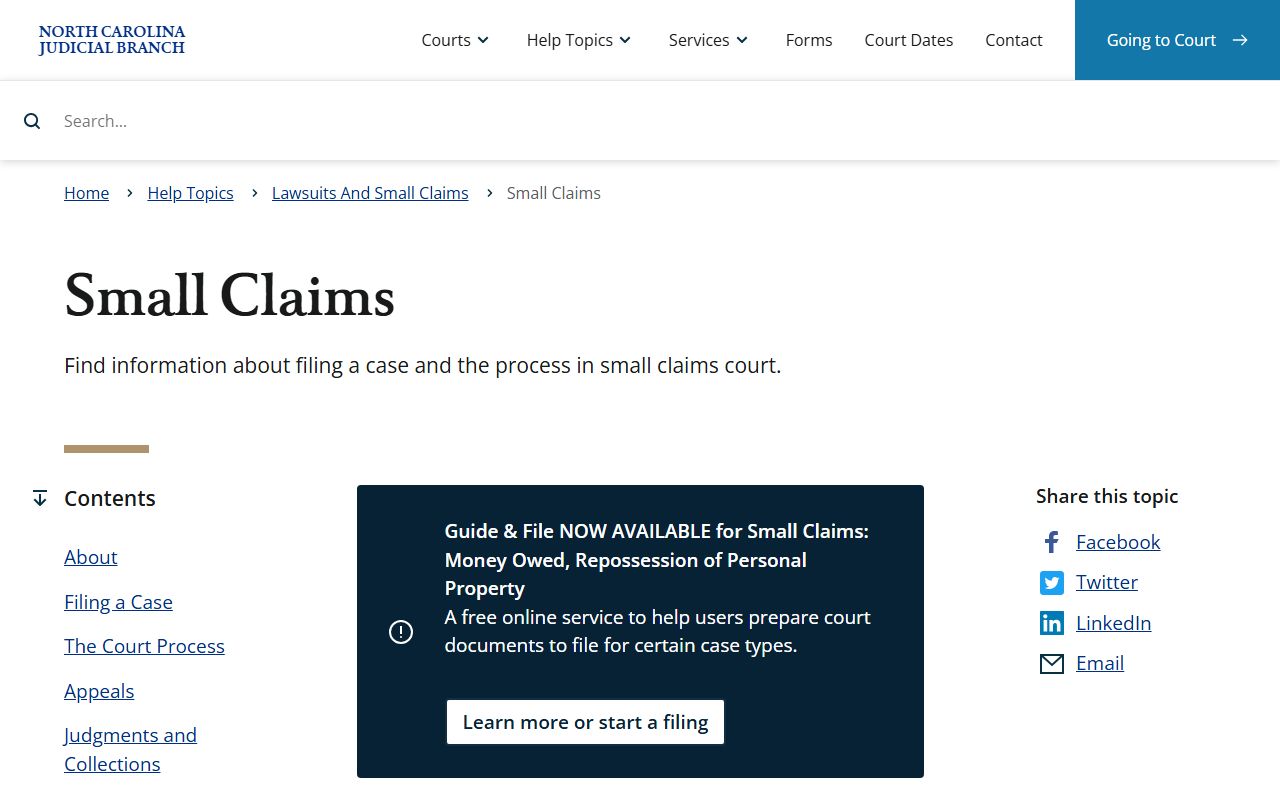
Small claims records are part of the local court system even though they do not begin as Superior Court trials.
Macon Court Divisions
Criminal, civil, domestic, juvenile, traffic, estate, and special proceeding files use different labels, but the records custodian remains the Clerk of Superior Court. Domestic and juvenile matters can have more access limits. Estate files belong to the Clerk's probate role. Traffic and infraction matters often use citation and court-date tools before they require a full case-record search.
For criminal records, users should distinguish the court file from the Sheriff's arrest or detention record. For traffic records, the court case is separate from the NCDMV driver record. For marriage and divorce, the split is different again: marriage licenses and certificates belong to the Register of Deeds, while divorce decrees are District Court records. Superior Court pages should make those boundaries clear because many searches fail when the request goes to the wrong office.
| Record question | Likely Macon County channel |
|---|---|
| Felony case outcome | Superior Court record through eCourts or Clerk |
| Misdemeanor court date | District Court date search or eCourts |
| Certified divorce decree | Clerk of Superior Court |
| Current jail custody | Sheriff / Detention Center |
| Marriage certificate | Register of Deeds |
Federal Courts Are Separate
Macon County state court records do not include federal criminal, federal civil, bankruptcy, or Fourth Circuit appellate cases. Federal trial matters route to the U.S. District Court for the Western District of North Carolina. Bankruptcy matters route to the U.S. Bankruptcy Court for the Western District of North Carolina. Federal docket searches use PACER or CM/ECF, not the Macon County Clerk.
A federal case can affect a person or business in Macon County, but it does not become a Macon County Superior Court file merely because the party lives in the county. Federal criminal prosecutions are handled by the U.S. Attorney's Office for the Western District of North Carolina. Federal civil and bankruptcy filings use federal clerks, federal docket numbers, and federal access systems. Certified federal filings must come from the federal court.
The Western District bankruptcy court is the proper source for bankruptcy filings affecting Macon County residents or businesses.
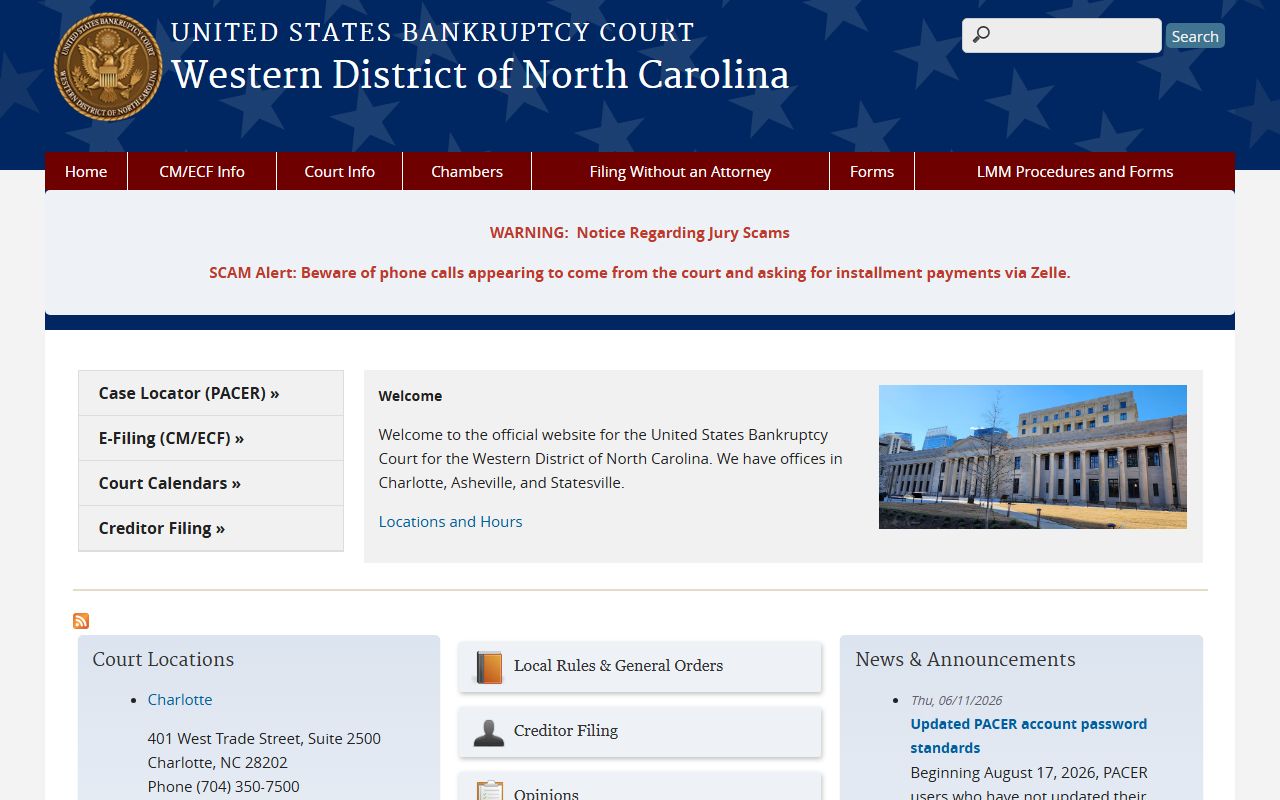
A bankruptcy may affect local civil judgments, but the bankruptcy docket itself is a federal record.
The U.S. Court of Appeals for the Fourth Circuit is the federal appellate court for Western District federal cases.
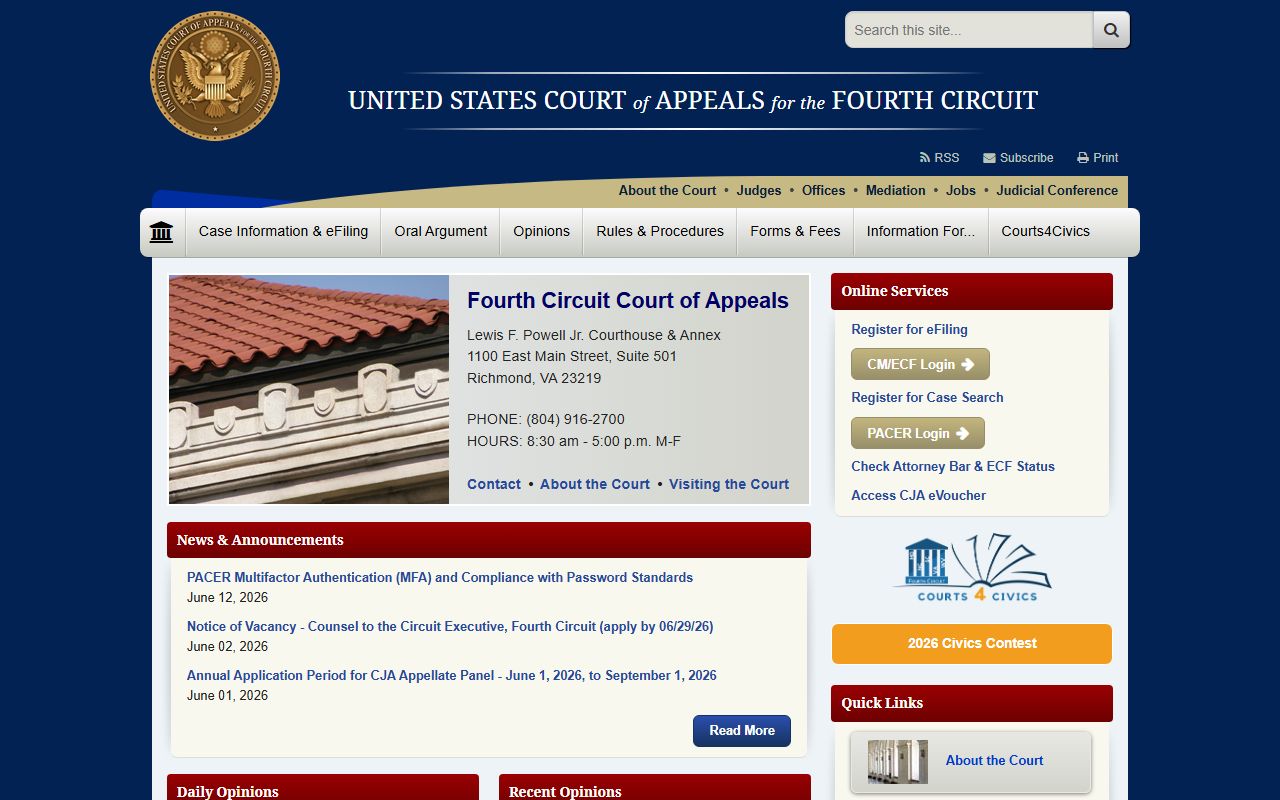
Federal appeals are separate from North Carolina Court of Appeals review of Macon County state court cases.
Macon County Magistrate Functions
Magistrates handle small claims, summary ejectment, initial criminal process, certain warrants, and some bond or release-condition duties assigned by law. A magistrate action may later become a District Court or Superior Court record after filing. For live enforcement or detention questions, the Sheriff's Office may also be involved, but the filed court record belongs with eCourts and the Clerk.
Magistrate and small claims activity can be the first public-facing step in a dispute. Summary ejectment cases can move quickly. Small claims judgments can be appealed into District Court. Criminal process can lead to a first appearance, bond conditions, and later court dates. Users checking Macon County records should look for the later court case number once a matter is filed, because that number is usually the best way to track events after the first magistrate-level action.
Note: When the research does not identify a numbered court, the correct local presentation is the statewide court division and courthouse contact, not invented court numbers.